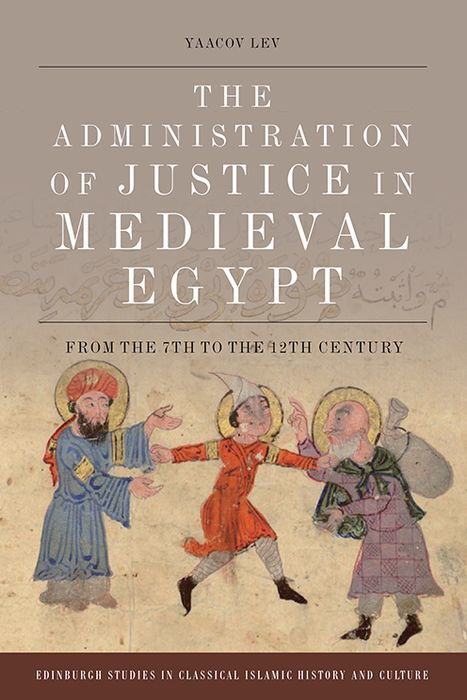
This book shows how political and administrative forces shaped the way justice was applied in medieval Egypt. It introduces the model that evolved during the 7th to the 9th centuries, which involved four judicial institutions: the cadi, the court of complaint (mazalim), the police/shurta (responsible for criminal justice) and the Islamized market law (hisba) administrated by the market supervisor/muhtasib. Literary and non-literary sources are used to highlight how these institutions worked in real-time situations such as the famine of 1024-1025, which posed tremendous challenges to the market supervisors in Cairo. The inner workings of the court of complaint during the 11th-12th century Fatimid state are revealed through array of documentary sources. Further, non-Muslim communities, their courts and their sphere of responsibilities are treated as integral to how justice was dispensed in medieval Islam. Documentary sources offers significant insights into these issues and illuminate the scope and limits of non-Muslims self-rule/judicial autonomy.
In sum, the book shows that the administrative and political history of the judiciary in medieval Egypt implicitly and explicitly illuminates broader questions about religious and social forces that shaped the lives of medieval people in the Middle East, Muslims and non-Muslims alike.
Only logged in customers who have purchased this product may leave a review.





Reviews
There are no reviews yet.